Advantages of THRIE BEAM Guardrail
The thrie beam guardrail (also called tri-wave crash barrier, road barrier, guardrail barrier, metal beam barrier, etc.) is designed to install along the highway to help protect the errant cars from crashing off the road. FEATURES…
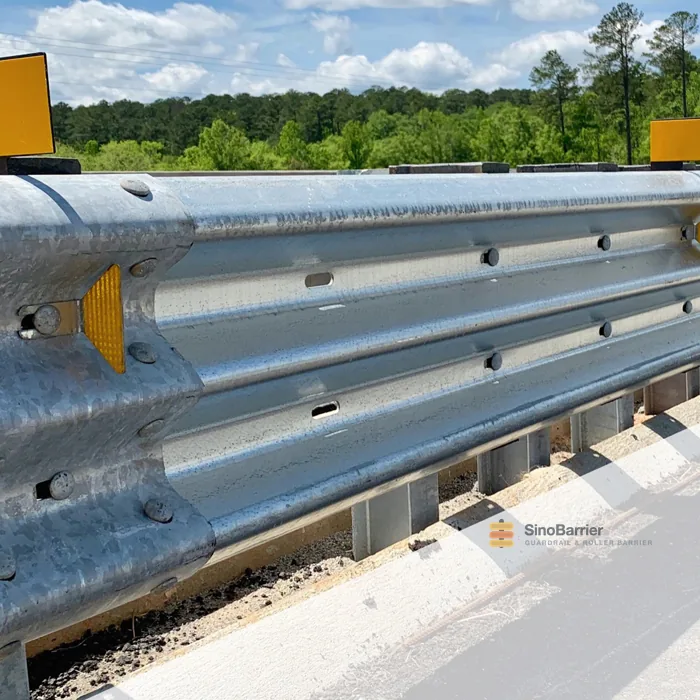
Choosing the right guardrail is not only a compliance decision; it directly affects how well a roadside system redirects vehicles, limits impact severity, and protects people near hazards. Thrie Beam guardrail is often selected when a project needs stronger containment, reduced deflection, and durable performance in demanding road environments. For engineers, contractors, and road authorities comparing roadside safety solutions, understanding where thrie beam fits can lead to safer and more cost-effective decisions.
What makes thrie beam guardrail different?
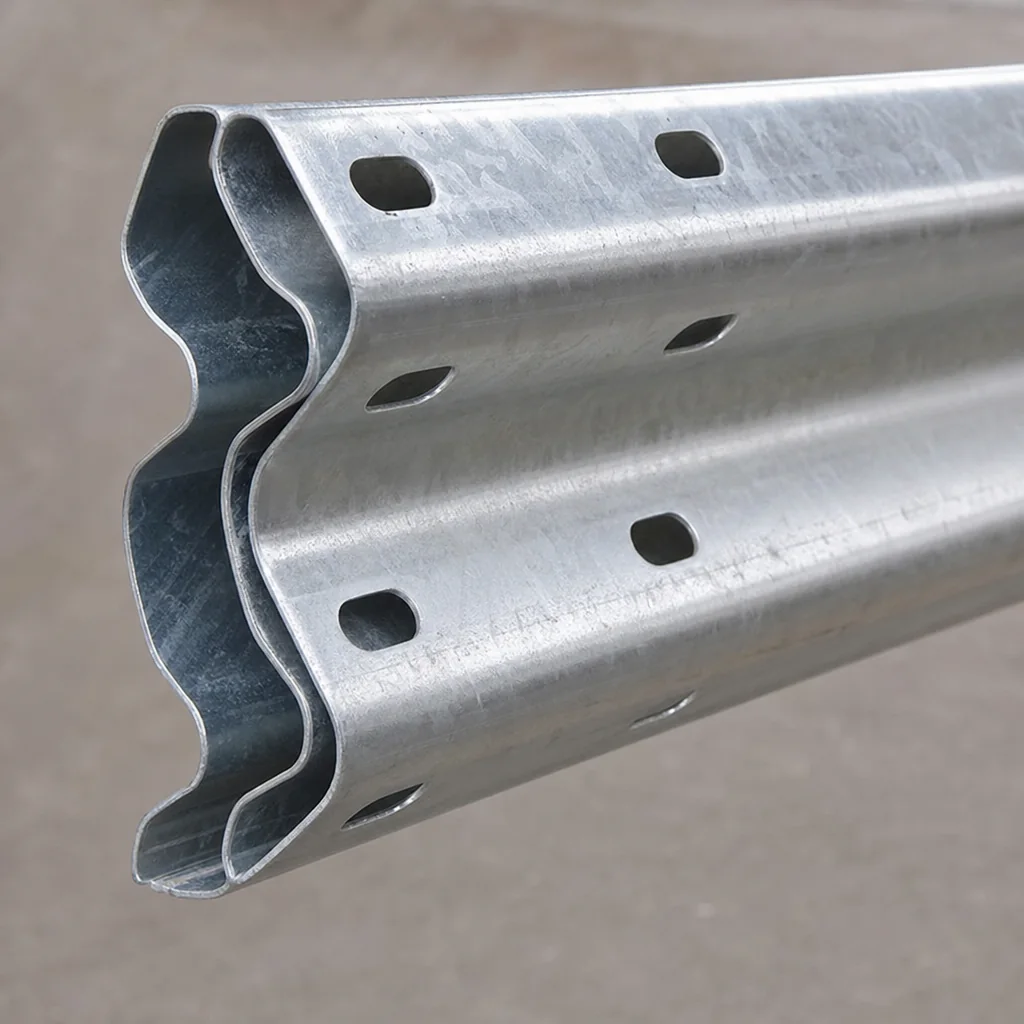
Thrie Beam guardrail is a steel roadside barrier with a deeper, triple-corrugated rail profile. That extra corrugation gives the rail greater stiffness and impact resistance than a standard W-beam guardrail, helping it manage higher-energy vehicle impacts more effectively. In practical terms, it is designed to absorb and distribute collision forces while guiding an errant vehicle along the barrier instead of allowing it to leave the roadway.
The main advantages of thrie beam guardrail come from this combination of shape, strength, and controlled flexibility. A barrier that is too weak may deform too far, while a barrier that is too rigid may transfer more crash energy back to the vehicle. Thrie Beam occupies a useful middle ground for many high-risk locations: strong enough for demanding impacts, but still part of a semi-rigid guardrail system that can deflect and dissipate energy.
Stronger containment supports safer roads
One of the most important road safety features of a thrie beam system is its improved containment capability. The larger rail section creates a higher and stronger face for vehicle contact, which can be especially valuable where the consequences of a run-off-road crash are severe. On curves, embankments, bridges, medians, and high-speed corridors, that added strength helps keep vehicles from crossing into dangerous zones.
Thrie Beam systems can also reduce the likelihood of excessive rail deformation. Lower deflection is valuable when there is limited space behind the barrier, such as near steep slopes, bridge piers, retaining walls, utility poles, or drainage structures. If a guardrail bends too far, the vehicle may still reach the hazard the barrier was meant to shield. A stronger system helps preserve the protective zone.
Key performance benefits include:
- Higher impact resistance: The triple-wave shape increases rail stiffness and helps manage heavier or faster impacts.
- Reduced dynamic deflection: Less barrier movement can be useful where roadside clearance is limited.
- Improved load distribution: Collision energy is spread along the rail and posts rather than concentrated at one point.
- Better vehicle guidance: The rail face helps redirect vehicles along the roadway, supporting a controlled recovery path.
- Durable service life: Galvanized steel construction is commonly used to resist corrosion and support long-term performance.
How does thrie beam compare with W-beam, concrete, and plastic barriers?
Thrie Beam guardrail is generally stronger and stiffer than W-beam, lighter and easier to repair than concrete, and far more suitable for permanent high-risk roadside protection than plastic barriers. Each barrier type has a role, but thrie beam is often preferred when a project needs a higher-performance steel system without moving to a fully rigid concrete barrier.
Thrie Beam versus W-beam
W-beam guardrail is widely used because it is economical, familiar, and effective for many standard roadside conditions. However, its shallower two-wave profile typically provides less stiffness than thrie beam. Where traffic speeds are high, vehicle mix is heavier, or the hazard behind the rail is especially serious, thrie beam may offer a stronger safety margin.
That does not mean W-beam is a poor choice. It remains suitable for many roads where standard containment and typical roadside clear zones are available. The decision often comes down to risk: if the location has sharper curves, limited recovery space, or a history of severe run-off-road exposure, the advantages of thrie beam guardrail become more relevant.
Thrie Beam versus concrete barriers
Concrete barriers provide very high containment and minimal deflection, which makes them useful in medians, work zones, bridges, and locations where there is almost no room for movement. The tradeoff is rigidity. Concrete can be more demanding to install, relocate, or repair, and its impact characteristics differ from steel guardrail systems.
Thrie Beam can be a more adaptable option where some deflection is acceptable and where crews need a system that is easier to install or replace in sections. Damaged steel rails and posts can often be repaired without removing an entire continuous barrier line. For changing road layouts, rural highways, mountainous terrain, or phased projects, that flexibility can matter.
Thrie Beam versus plastic barriers
Plastic barriers are most useful for temporary traffic guidance, low-speed channelization, or work-zone separation when filled and installed as intended. They are not a direct substitute for a permanent thrie beam guardrail system in high-energy roadside crash conditions. If the goal is long-term vehicle containment near a serious hazard, steel guardrail is usually the more appropriate category to evaluate.
Where is thrie beam guardrail most useful?
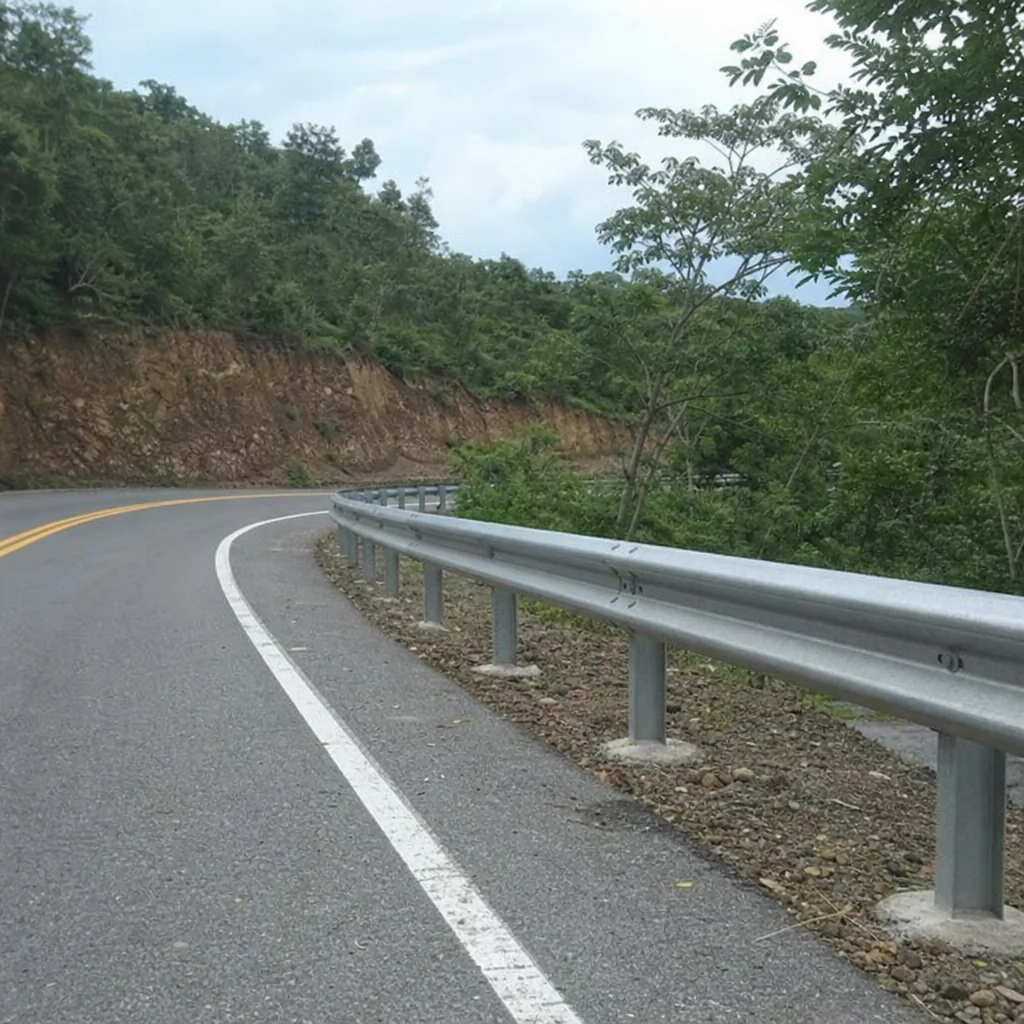
Thrie Beam guardrail is most useful in locations where impact severity may be higher and where standard guardrail deflection could create added risk. It is commonly considered for high-speed roads, hazardous curves, bridge approaches, steep drop-offs, narrow shoulders, and areas near fixed objects. These are the places where stronger roadside safety solutions can make a measurable difference in how a crash develops.
Good candidate locations include:
- High-speed highways: Faster traffic increases crash energy, making stronger containment more valuable.
- Sharp curves and ramps: Vehicles are more likely to leave the lane when speed, steering angle, and road geometry combine.
- Mountain and hillside roads: Steep slopes and limited shoulders leave little room for recovery after lane departure.
- Bridge approaches and transitions: Stronger rail sections can help manage impact near rigid structures.
- Median and roadside hazards: Poles, walls, culverts, and drop-offs may justify a higher-performance barrier.
- Heavy-vehicle corridors: Roads with frequent trucks, buses, or mixed traffic may benefit from added system strength.
The best choice still depends on project design requirements, local standards, crash testing criteria, soil conditions, post spacing, terminal treatments, and installation quality. A strong rail profile cannot compensate for poor layout, incorrect height, weak anchorage, or mismatched components.
Practical installation and maintenance considerations
A thrie beam guardrail performs best when it is treated as a complete system rather than a single steel panel. Posts, spacers, bolts, end terminals, transitions, and rail height all affect how the barrier responds during impact. Contractors should follow applicable road authority specifications and ensure that transitions to bridges, W-beam sections, or rigid barriers are designed carefully.
Maintenance is another important advantage. Galvanized steel helps protect the rail from weather exposure, but inspections are still necessary after crashes, storms, snowplow contact, or visible corrosion. Bent rail panels, damaged posts, loose bolts, and improper alignment can reduce performance. Timely repair helps maintain the system’s intended strength and keeps the roadway looking orderly.
A simple inspection checklist should include:
- Rail height and alignment along the full run
- Post condition, spacing, and embedment stability
- Visible corrosion, dents, tears, or deformation
- Bolt tightness and missing hardware
- End terminal and transition condition
- Clear space behind the guardrail for expected deflection
Better barrier selection starts with the roadside risk
The strongest guardrail is not automatically the best choice for every site. The right solution is the one that matches traffic speed, vehicle type, roadside hazards, available space, installation conditions, and long-term maintenance capacity. Thrie Beam guardrail stands out when a standard barrier may not provide enough strength or when a rigid barrier would be less practical.
For projects that demand reliable containment, controlled deflection, and durable steel construction, thrie beam offers a balanced answer. Its triple-corrugated profile gives it clear performance advantages, while its modular design supports installation and repair flexibility. When included as part of a well-designed roadside safety plan, it can help reduce crash severity and improve protection where the stakes are highest.
FAQ
Why does thrie beam guardrail reduce deflection?
Because the triple corrugation gives the rail a stiffer section, and a stiffer rail bends less before it turns the vehicle. Reduced dynamic deflection matters where there is no room behind the barrier for the rail to move: bridge piers, retaining walls, utility poles, drainage structures and steep slopes. It is the deflection figure, not only the strength figure, that decides whether the hazard stays out of reach.
Which road projects should specify thrie beam rather than W-beam?
The ones where a run-off-road crash is likely to be severe, or where the barrier has little room to deflect: high-speed corridors with a heavy vehicle mix, sharp curves and ramps, bridge approaches, medians and roadside fixed objects, and steep drop-offs with narrow shoulders. On a standard road with a wide clear zone, W-beam gives a comparable level of protection for less steel.
Does thrie beam guardrail cost more than W-beam?
The rail carries a third corrugation, so it uses more steel per metre and the material cost is higher than W-beam. The comparison that matters is cost per kilometre of protected road: thrie beam is normally specified only on the hazard-heavy sections, it reuses the same posts, spacers and bolts, and a single damaged panel can be replaced without rebuilding the run. We quote against the drawing or the bill of quantities.
What maintenance does a thrie beam guardrail need?
Galvanized thrie beam needs little routine work, but it does need inspection. Check rail height and alignment along the full run, post condition and embedment, bolt tightness, and any dents, tears or corrosion after a crash, a storm or snowplow contact. Because the system is modular, a damaged panel or post is replaced on its own rather than by rebuilding a continuous barrier line.
Need this specified for a live project?
Request a quotation