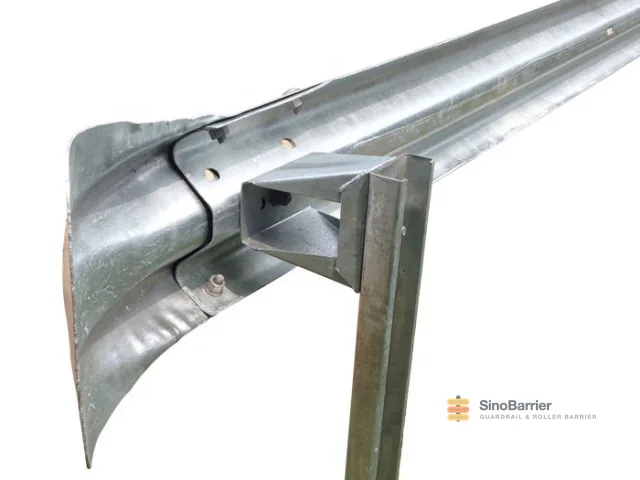
Guardrail Spacer
Box Shape Guardrail Spacer
A box guardrail spacer is a closed-section block-out for thrie-beam and roller barrier installations, where a flat spacer…
View detailsBox, H, U, C, F and trapezoidal spacers and offset blocks that hold the beam at the offset it was crash-tested at.
A box guardrail spacer is a closed-section block-out for thrie-beam and roller barrier installations, where a flat spacer…
View details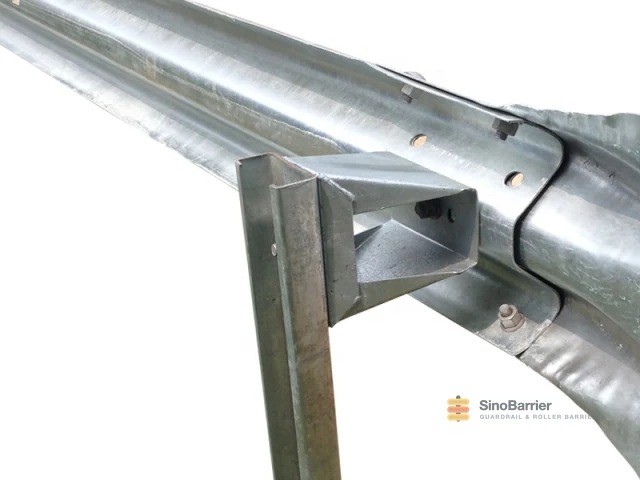
A guardrail box block holds the beam away from the post so the barrier can deflect on impact;…
View details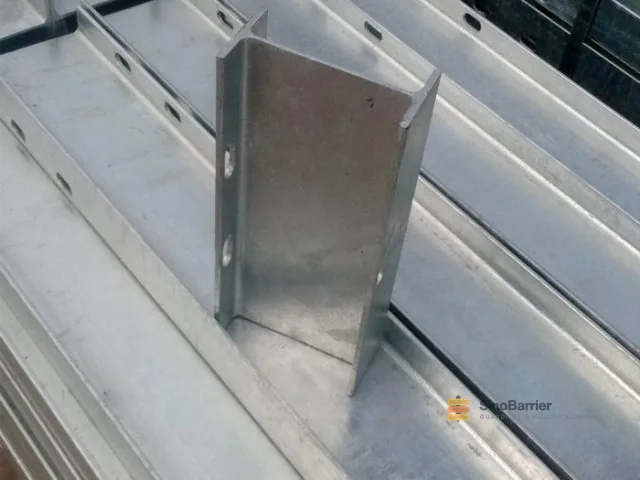
The H shape guardrail spacer fits between an H-section post and the beam, keeping the rail at the…
View details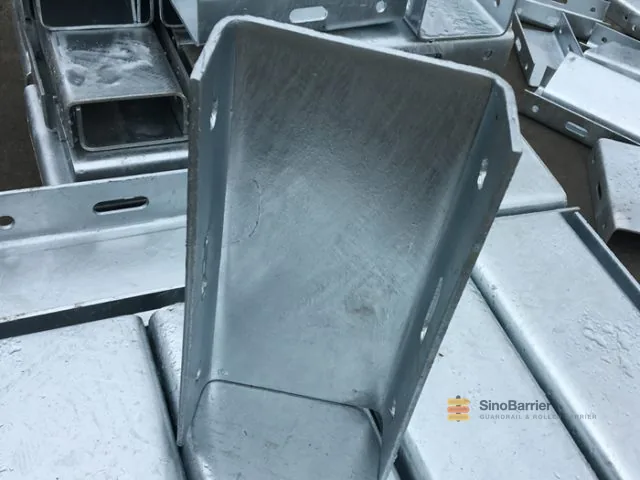
A U shape guardrail spacer is pressed from strip into the U profile that matches a lipped-channel post…
View details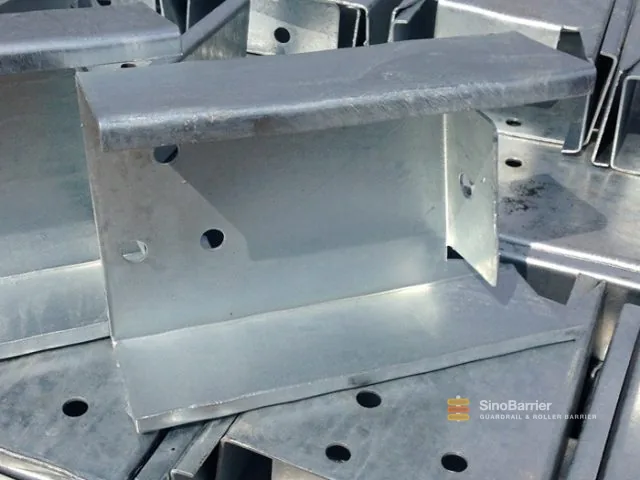
The trapezoidal guardrail spacer gives a wider, stiffer block-out than a flat spacer, which suits thrie-beam sections and…
View details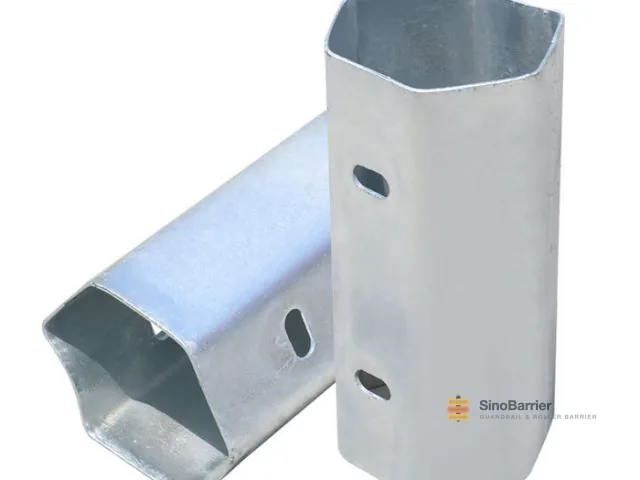
The guardrail offset block holds the rail away from the post at the designed offset, which is what…
View details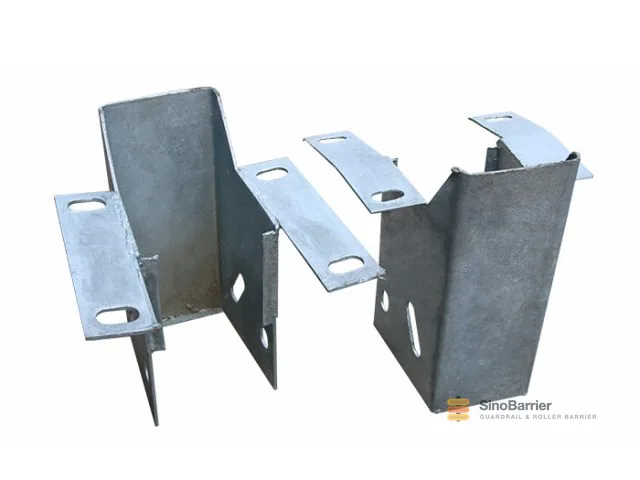
The F shape guardrail spacer is a folded block-out used where the post section and beam height require…
View details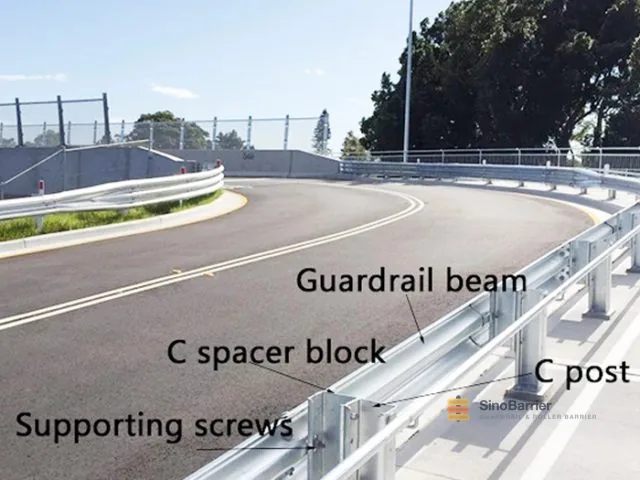
A C shape guardrail spacer wraps the post web, holding the beam at the offset the drawing specifies…
View detailsA guardrail beam is not bolted flat against the post. It is held out at a set distance by a spacer or offset block, and that distance is part of the crash-tested geometry. Reduce the offset and the wheel can catch on the post before the beam has begun to deflect; increase it and the rail may not reach the vehicle at the angle the test assumed. The spacer is a small, cheap part that decides whether the system behaves the way it was certified.
We make the full spacer range from 2.5 mm to 5.0 mm wall: box, H, U, C, F and trapezoidal sections, plus the plain offset block. All are hot-dip galvanized to the same AASHTO M180 550 g/m² minimum as the beam and the posts, so the whole assembly carries one coating class and one certificate.
| Sections | Box, H, U, C, F, trapezoidal and plain offset block |
| Wall thickness | 2.5 mm – 5.0 mm, or to drawing |
| Steel grade | Q235B (S235JR), Q345B (S355JR) |
| Coating | Hot-dip galvanized, 550 g/m² minimum |
| Holes | Punched to the beam and post hole pattern |
| Length | Produced to the offset the drawing specifies |
| Standards | AASHTO M180, EN 1317, GB/T 31439 |
| MOQ | 1 × 20GP container |
| Lead time | 15–25 days after deposit |
Because spacers are the part most often left to a local fabricator, they are also the part most often out of tolerance on site. Supplying them with the beam, punched to the same drawing and galvanized in the same bath, removes that variable.
Send the beam profile, the post section and the required offset, or simply the standard drawing. We will confirm the spacer section and return a take-off with the beam and post quantities, normally within one working day. Fixings and certificates to EN 10204 3.1 ship with the order.
Send the drawing or the tender clause. We will confirm the section, the coating weight and the post spacing, then return a take-off and a factory price — usually within one working day.
Talk to an engineerSend the drawing, the bill of quantities or just the standard you are building to. We return a take-off, a shop drawing and a factory price within one working day.