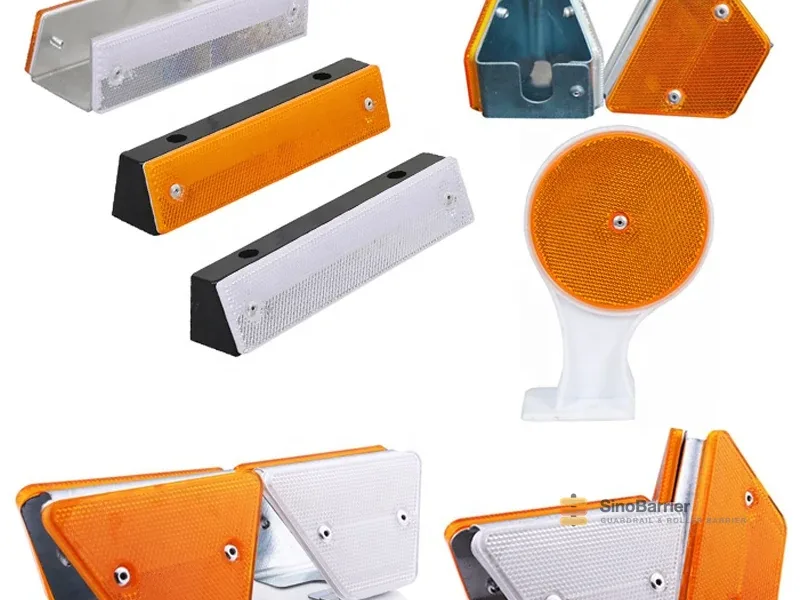
 AASHTO M180
Guardrail Pavement Marker
Part of the Guardrail Accessories range · Highway Guardrail.
Model: Road pavement marker
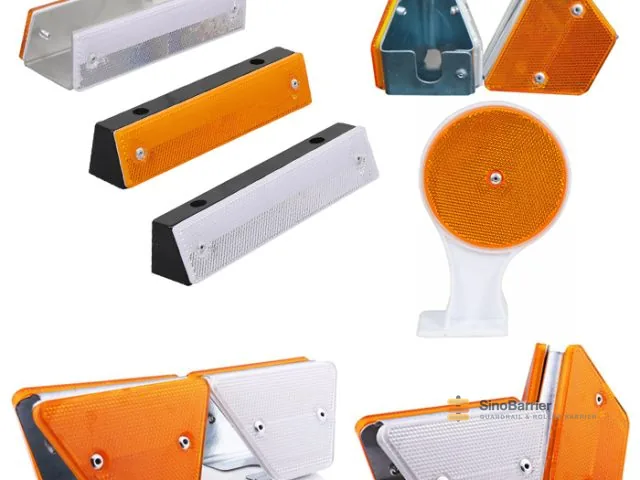
A guardrail pavement marker picks out the line of the barrier at night, so a driver reads the alignment of the road from the posts rather than from the center line. Products Description High Quality Screw Install Reflex Truck Trailer Reflectors It is a kind of traffic safety facility, which is set along the edge of the road, displaying the contour of the road and guiding the normal running of the vehicle.The reflector…
- Standard AASHTO M180 / EN 1317
- Material Q235B / Q345B steel
- Surface Hot-dip galvanized, ≥ 550 g/m²
- MOQ 1 × 20GP container
- Lead time 15–25 days
- Mill test certificate with every shipment
- Shop drawings and setting-out plan included
- Custom lengths, hole patterns and coating weights
Technical specification
| Profile | Road pavement marker highway guardrail reflector trapezoidal |
| Material | Q235B / Q345B steel (S235JR / S355JR / ASTM A529M) |
| Surface treatment | Hot-dip galvanized; powder or PVC coated on request |
| Zinc coating | ≥ 550 g/m² (≈80 µm), AASHTO M180 |
| Standard | AASHTO M180 / EN 1317 / GB/T 31439 |
| Certificate | Mill test certificate and coating weight report with every shipment |
| Note | Custom length, hole pattern and coating weight produced to your drawing. |
Dimensions shown are the standard range. Non-standard lengths, hole patterns and coating weights are produced to order — send your drawing for a confirmation drawing.
Description
Pavement marker: where it is used
The pavement marker is the delineator fixed to the road surface or to the lining along the edge of a carriageway, used to outline the edge of the road and the shape of a curve at night. It is the companion of the guardrail reflector: the marker sits on the pavement or the lining, the reflector sits on the barrier, and together they draw the whole edge of the road for a driver in the dark. It is used on expressways, first-class highways and urban roads.
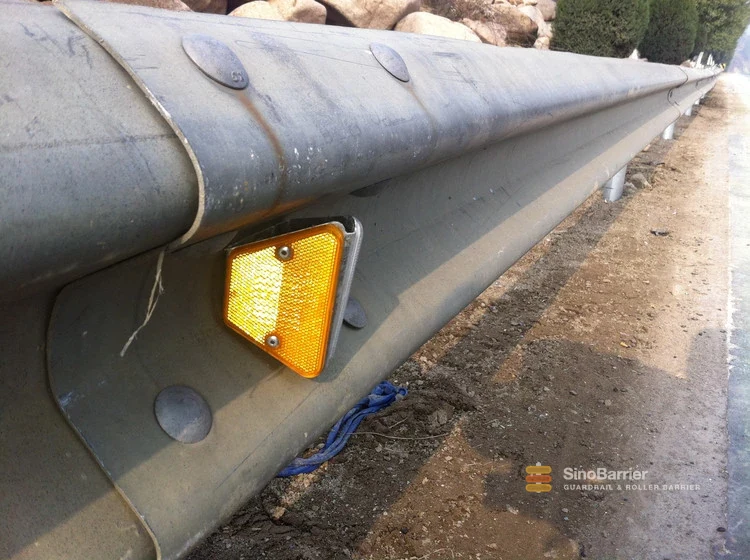
Where the marker is set
A pavement marker is fixed along the edge line, and the spacing is what makes the outline readable: set too far apart and the driver loses the line of the curve, too close and the markers merge into a single strip. On an expressway or a first-class highway, where closing speed is high and a driver has less time to react, the markers are set continuously along the outer edge and at every change of alignment.
Fixing the pavement marker
The marker can be outlined as a free-standing delineator where there is no roadside structure, or as an attached type where a structure is present and the marker is fixed to it. Which of the two is used is set by the site rather than by the marker, and it is worth getting right, because a marker that is set incorrectly is one a driver will not see. Fixing details follow the standard road layout drawing.
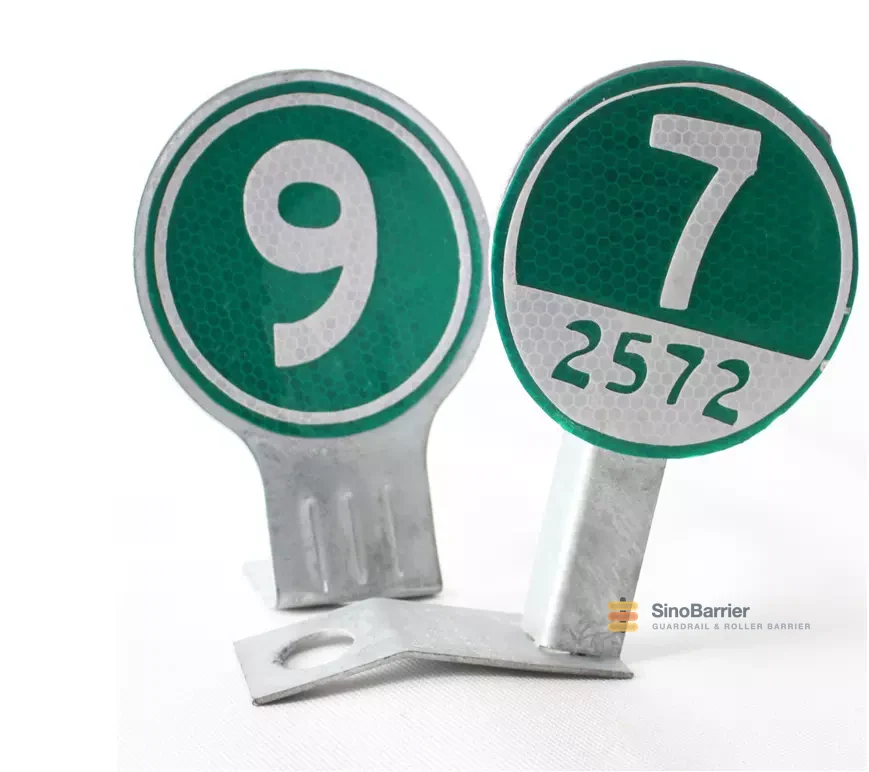
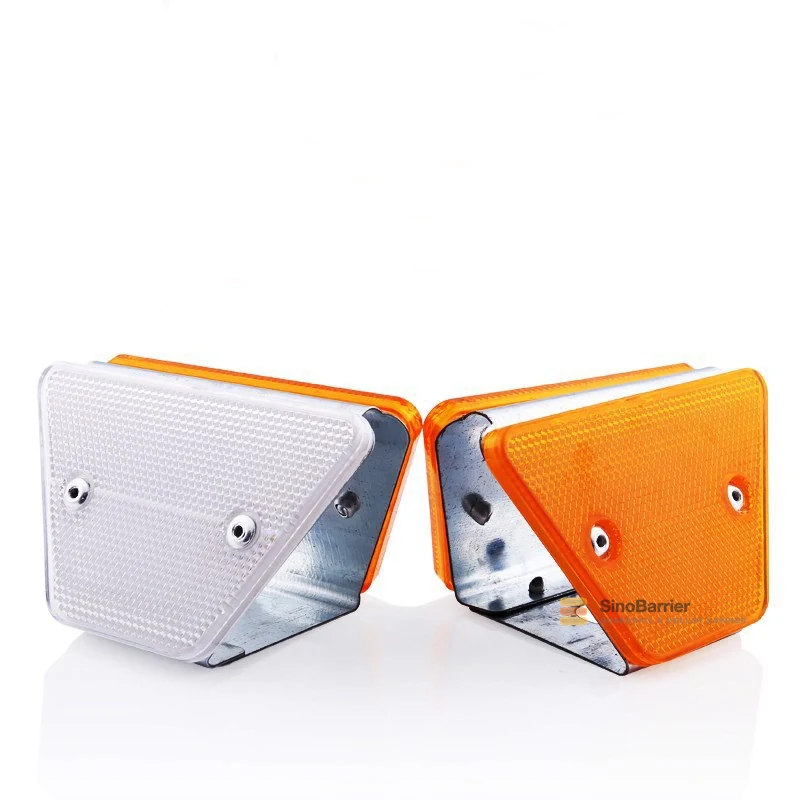
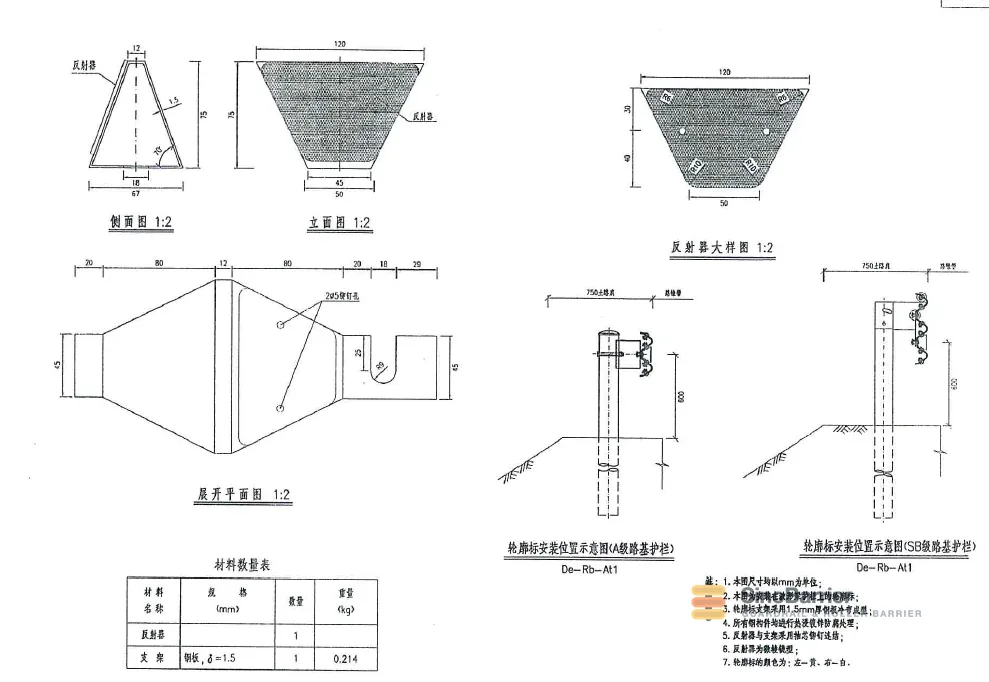
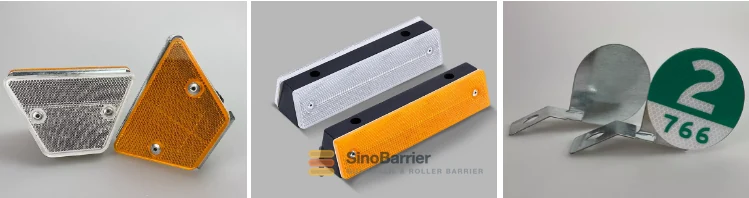
Standards, sizes and ordering
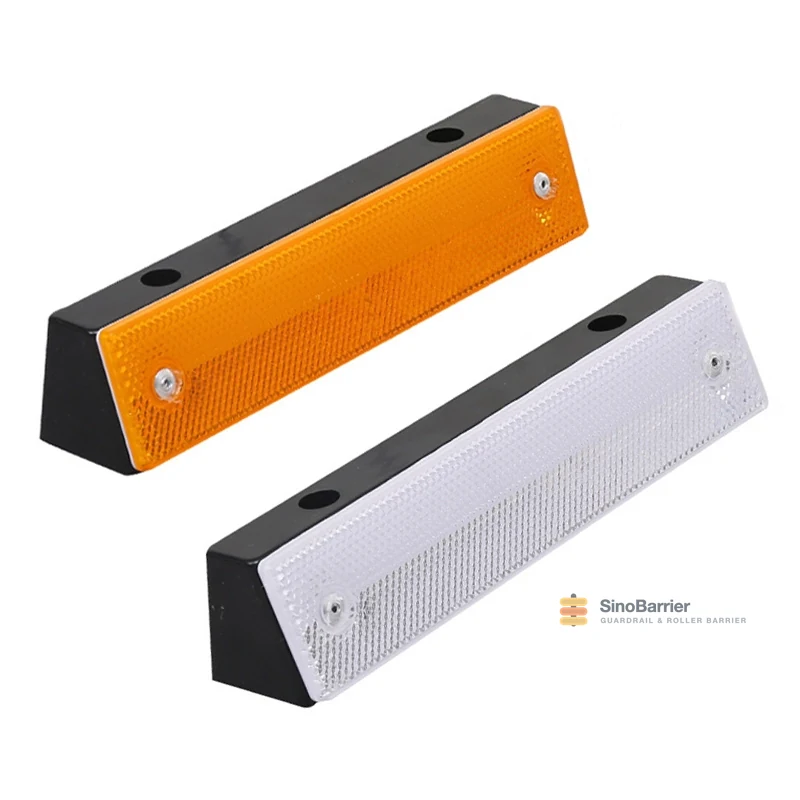
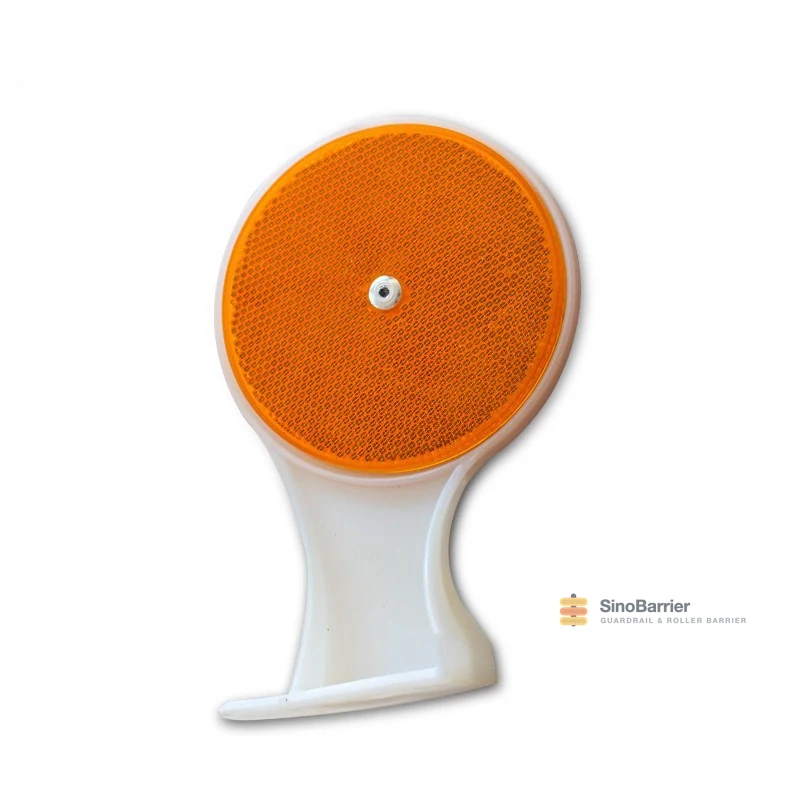
Pavement markers are supplied in rectangular, trapezoid and round forms in the standard red, white and orange, one-sided or two-sided, with the sizes listed in the table below. Tell us the shape, the color and the quantity and we quote from our own works; samples can be sent for a trial fitting.
| Rectangle: | 40x180mm Color :Red/white/orange one side / two side |
| Trapezoid: | 50x70x120mm Color: Red/white/orange one side / two side |
| Round: | φ80mm/100mm/110mm Color: Red/white/orange one side |
Frequently asked questions
- What is a pavement marker used for?
- It is the delineator fixed to the road surface or to the lining along the edge of a carriageway, outlining the edge of the road and the shape of a curve at night. It is the companion of the guardrail reflector: the marker sits on the pavement and the reflector sits on the barrier.
- Where is the marker set?
- Along the edge line and through curves, spaced to the marking pattern the road authority uses. Through a curve the spacing usually tightens, because that is where a driver needs to read the alignment fastest.
- How is the pavement marker fixed?
- The marker is a trapezoidal steel body, hot-dip galvanized to a minimum 550 g/m², fixed to the pavement or the lining with the detail the unit is made for. It is supplied together with the rest of the accessories.
- Can the marker be supplied as part of a kit?
- Yes. Markers, reflectors, caps, bolts and washers are packed per barrier run, so a section of road can be marked and installed from one consignment without short parts on site.
Key features
- Reflectors, end caps, bolts, nuts, washers and pavement markers
- Grade 8.8 bolts and hot-dip galvanized fasteners as standard
- Reflectors in white, red, yellow and dual color, tape or moulded
- Packed as kits per barrier run so nothing is short on site
- All items hot-dip galvanized to match the beam and posts
Where it is used
- All guardrail installations
- Visibility and night-time marking
- Bolt replacement and repair
- Sign and delineator schemes
- Barrier transitions
- Site packing and delivery kits
Complete the system
A barrier is supplied as a set. These are the components that go with this item on a typical installation.
Not sure which specification fits?
Tell us the road class, design speed and the standard your client is working to. Our engineer will come back with the section, the coating weight and the post spacing that meet it — and the price for the quantity you need.
Ask an engineerOther items in this range
Guardrail Reflector
Guardrail reflectors mount on the beam or the post and return the headlamp beam along the line of…
View details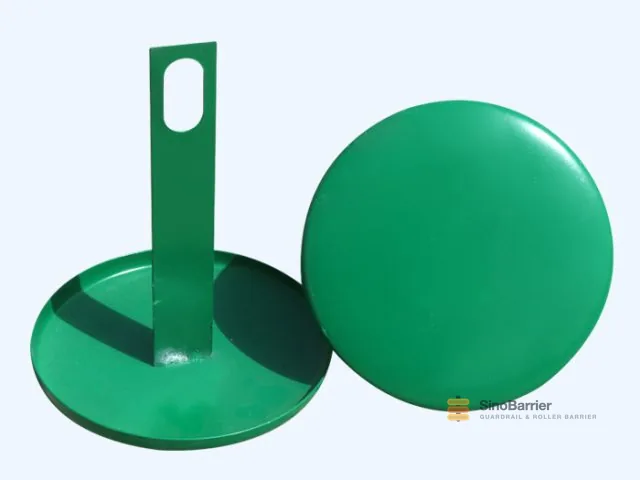
Guardrail Caps
A guardrail post cap closes the top of every steel post, keeping water out of the section and…
View details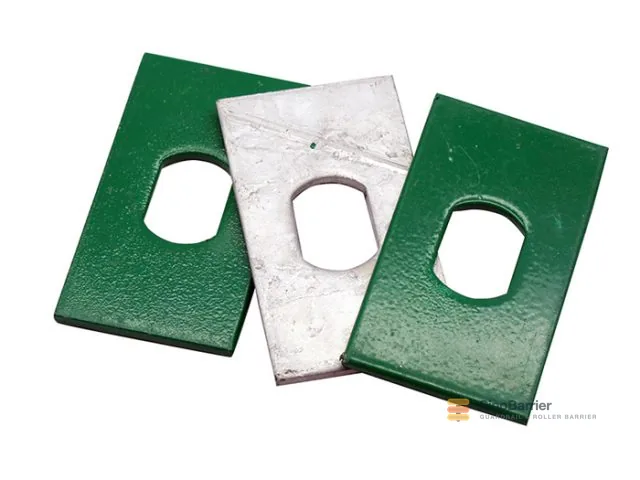
Guardrail Washer
The guardrail washer sits under the bolt head on every beam-to-post connection, spreading the load across the slotted…
View details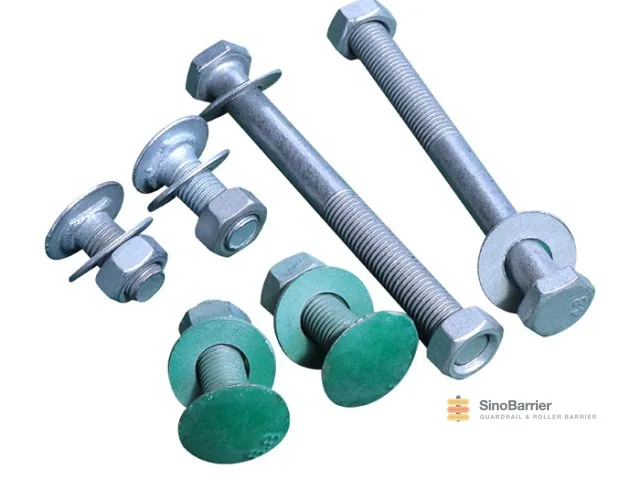
Guardrail Bolts and Nuts
Highway guardrail bolts and nuts are mainly used between guardrail and spacer, spacer and post, They play a…
View details