W-Beam Guardrail Safety: Why Is It a Life Protection Line?
In recent years, with the continuous development of economy, highway has gradually become an important means of transportation for people to travel. However, the speed of the highway is relatively high, taking into account the safety…
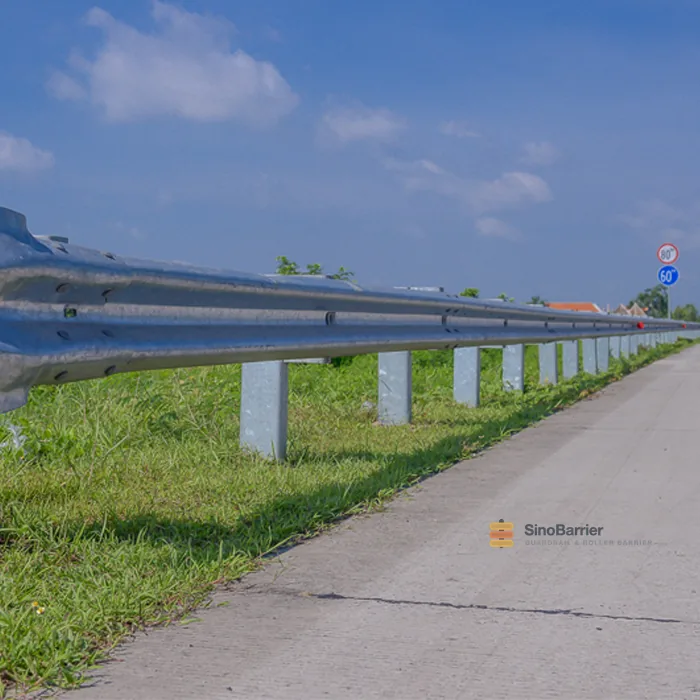
In recent years, with the continuous development of economy, highway has gradually become an important means of transportation for people to travel. However, the speed of the highway is relatively high, taking into account the safety issue, W beam guardrail came into being. This semi-rigid material guardrail not only has strong impact resistance, but also can better absorb the energy generated after the collision to ensure the safety of driving and passengers. Therefore, this kind of highway guardrail can be said to be a modern “life safety protection project”, and it is also the life protection line on the highway.
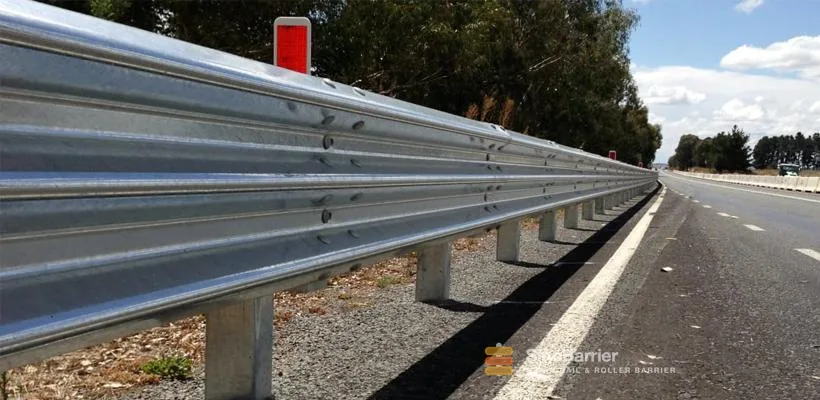
As a kind of road traffic safety facilities, waveform guardrail has played an important role in ensuring traffic safety and improving road traffic capacity, and has now become one of the standard fittings of modern highways.
In the following aspects, this highway guardrail provides security for people:
Cushioning impact
The structural characteristics of the corrugated guardrail make it have strong impact resistance. Some sections may have a lot of hills or sharp turns, and these are the places where the vehicle is most likely to hit things. When the vehicle crashes, this highway guardrail can be deformed, absorb the energy generated by the vehicle impact, and transfer the energy to the ground, so as to effectively reduce the damage to the occupants of the vehicle. In the study, comparative experiments showed that vehicles using highway guardrails had much less injury to their occupants than vehicles without highway guardrails.
Change collision direction
The corrugated guardrail can also help drivers stay alert, guide the direction of the vehicle, avoid wandering into other lanes, and reduce the occurrence of traffic accidents. When the vehicle deviates from the lane, this highway guardrail enables the vehicle to glide along the direction of the guardrail, thereby avoiding the collision of the vehicle over the center divider and the opposite vehicle, and reducing the risk of the vehicle running out of the roadside steep slope or other dangerous areas.
Improve visibility
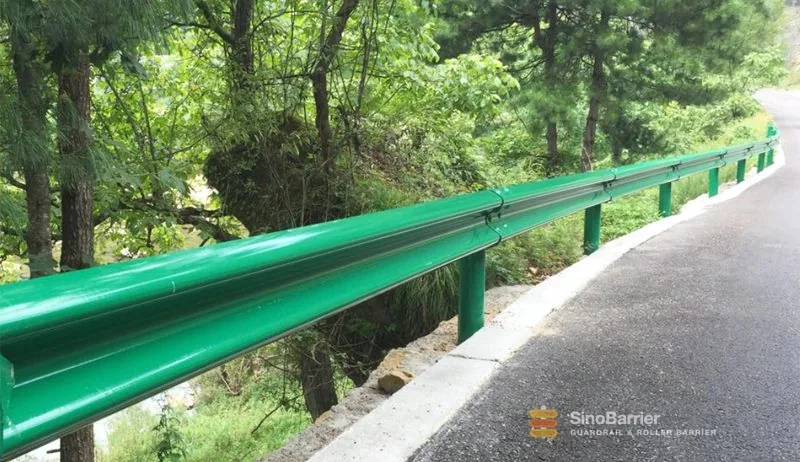
The highway guardrail is usually painted in a clearly visible color and is easy to be noticed by the driver in bad weather, dark night or other conditions with poor vision. This helps drivers stay safe in adverse conditions and avoid traffic accidents. On the highway, especially when the weather is bad at night or in rain and snow, drivers need to rely on guardrail to ensure safe driving.
Why the W-beam profile, and not a rigid wall
A W-beam guardrail is a semi-rigid barrier. The corrugated beam is stiff enough to hold a vehicle on the carriageway, but not so stiff that it stops the car dead on contact. That balance is what makes the barrier a life protection line rather than a fence. A rigid concrete wall would contain the vehicle, but the sudden stop would transfer the whole deceleration into the occupants. The steel rail yields instead, pockets around the front of the car and spreads the energy over a longer distance — the difference between a damaged barrier and a serious injury.
How a W-beam absorbs the impact
When a car strikes the rail, the beam bends, and the posts nearest the strike rotate in the ground and give way. The section is built to give way rather than resist, so the vehicle sheds speed along the length of the rail instead of in one instant. The rail then guides the car back roughly parallel to the road, which is why an errant vehicle is steered along the barrier rather than crossing into oncoming traffic or running down the embankment. The barrier is expected to be damaged by the impact it was tested for; that damage is what the design buys.
The standard behind the line
Barrier performance comes from a crash test, not from the weight of the steel. A W-beam run in a US layout is tested under MASH to TL-3 for the 100 km/h class of road, and the beam itself is made to AASHTO M180, which fixes the steel grade, the section tolerance and the zinc coating on the finished product — about 550 g/m² in a hot-dip line. A beam rolled to the right section but galvanized light will pass a visual check and still lose its coating years early on a coastal road or where de-icing salt is used.
Why the line has to be kept intact
A guardrail is a one-shot device in the sense that matters most: it is designed to take its test impact once. After a hit, the deformed beam, the rotated posts and any disturbed bolts have to be replaced before the run can protect the next vehicle. A damaged section left in place still looks like a barrier, which is exactly why roadside inspection matters — the line only protects the road while every metre of it is sound. Where a run is expected to be repaired quickly, the replacement beams and posts should be ordered with the original so that the section, the coating and the hole pattern match.
The barriers described here are supplied as a complete run — beams, posts, spacers and end terminals — with the coating weight and the mill certificate held against the order, so that a repaired section matches the line it replaces. Send the drawing or the road class and we will confirm the section, the post spacing and the terminal the layout calls for.
FAQ
Why is a W-beam guardrail called a life protection line?
Because of what it does at the moment of a crash. The corrugated rail is stiff enough to hold a vehicle on the carriageway, but not so stiff that it stops the car dead on contact. The rail bends, the nearest posts give way, and the energy of the impact is spread along the length of the barrier instead of being handed to the occupants in one instant. That is the difference between a damaged barrier and a serious injury, and it is why the run is counted as a life protection line rather than a fence.
What is a W-beam guardrail made of, and how is it protected from rust?
The beam is steel, roll-formed into the W profile, and the finished product is hot-dip galvanized. AASHTO M180 fixes the coating weight at about 550 g/m² on the finished beam, and that coating is what keeps the rail serviceable on a coastal road or where de-icing salt is spread. Because the requirement applies after galvanizing, it can be checked on the delivered product with a coating test rather than only on the steel that went into the line.
Which standard is a W-beam guardrail tested to?
Two separate things are specified, and they are often confused. Crashing performance comes from a full-scale test: a US-layout W-beam run is tested under MASH to TL-3 for the 100 km/h class of road. The product itself is made to AASHTO M180, which fixes the steel grade, the section tolerance and the zinc coating. A beam rolled to the right section but galvanized light will pass a visual check and still lose its coating years early.
Can a damaged guardrail be left in place until the next maintenance window?
No. A W-beam is designed to take its test impact once. After a strike, the deformed beam, the posts that rotated in the ground and any disturbed bolts no longer behave the way the line was tested, even though the barrier still looks intact from the road. The replacement beams and posts should be ordered with the original so that the section, the coating and the hole pattern match the run they are going into.
Need this specified for a live project?
Request a quotation