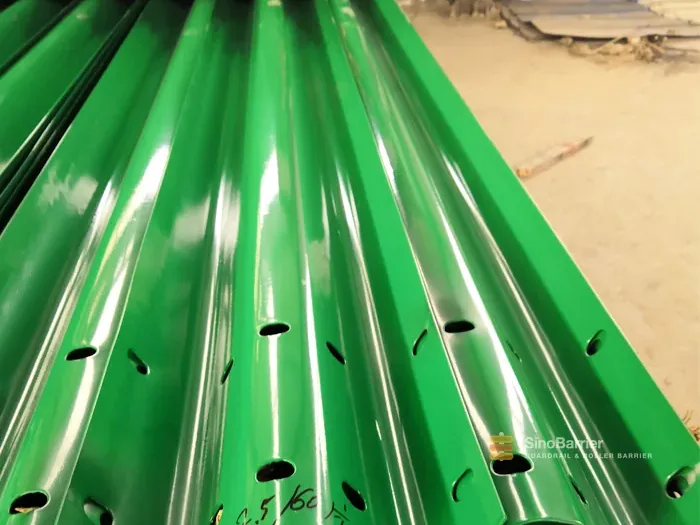
 AASHTO M180
PVC Coated W-Beam Guardrail
Part of the W-Beam Guardrail range · Highway Guardrail.
Model: W-Beam / 308–315 mm
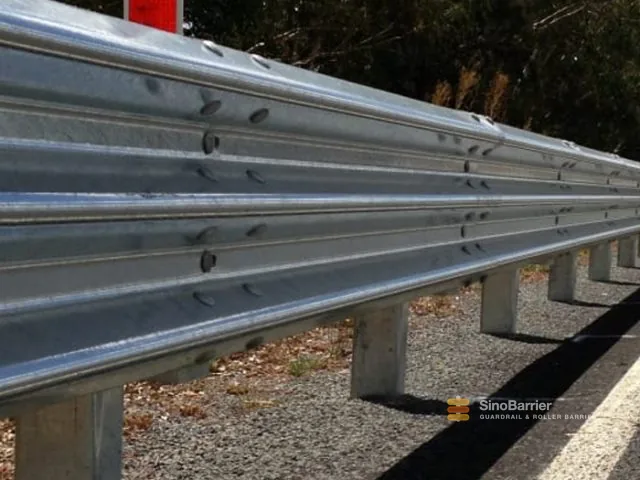
PVC coated W-beam guardrail puts a colored polymer jacket over the galvanized section for urban and mountain roads that need the barrier to be seen, in white, yellow, green or to your RAL number. Highway Guardrails are specified in major highways and roads projects as safety barrier. The Guardrail system Guardrail system absorbs the impact of out-of-control vehicles while guiding the vehicle to safer stops. Proven results and consistent material…
- Standard AASHTO M180 / EN 1317 / AS/NZS 3845-1999
- Material A572 / Q345B / HA350 / Q235B / A36 / S355JR / S275JR
- Surface Hot Dip Galvanized or Powder Coated
- Thickness Class A: 2.67 mm; Class B: 3.43 mm
- MOQ 1 × 20GP container
- Lead time 15–25 days
- Mill test certificate with every shipment
- Shop drawings and setting-out plan included
- Custom lengths, hole patterns and coating weights
Technical specification
| Parameter | Value |
|---|---|
| Profile | W-beam |
| Panel length | 2320 / 3320 / 4128 / 4130 / 4318 / 4320 / 7938 mm |
| Section width | 308 / 310 / 311 / 312 / 315 mm |
| Base metal thickness | 2.5 / 2.6 / 2.67 / 2.7 / 2.75 / 2.76 / 2.8 / 3 / 4 / 5 / 10 mm |
| Nominal base thickness | Class A: 2.67 mm; Class B: 3.43 mm |
| Steel grade | A572 / Q345B / HA350 / Q235B / A36 / S355JR / S275JR |
| Zinc coating mass | Type I: 550 g/m²; Type II: 1100 g/m²; 300 / 550 / 610 / 900 / 1100 / 1220 g/m² |
| Approximate coating thickness | 300 g/m² ≈ 40 µm; 550 g/m² ≈ 80 µm; 610 g/m² ≈ 85 µm; 1100 g/m² ≈ 160 µm; 1220 g/m² ≈ 170 µm |
| Surface treatment | Hot-dip galvanized / powder coated |
| Standard | AASHTO M180 |
| Mechanical properties | Re ≥ 355 MPa; Rm ≥ 495 MPa; A50 ≥ 15%. For the specified high-strength steel grade; verify the grade and batch mill certificate. |
Custom dimensions and acceptance requirements are confirmed against the approved drawing and order specification. Confirm the standard edition, coating type, measurement area and test method on the order. The micrometre figures are approximate catalogue pairings, not a sum across two faces or an acceptance test.
Dimensions shown are the standard range. Non-standard lengths, hole patterns and coating weights are produced to order — send your drawing for a confirmation drawing.
Description
PVC-coated W-beam guardrail: where it is used
The PVC-coated W-beam is the color-finished version of the barrier, used where the guardrail has to be visible against its surroundings or where the client wants a color scheme on the road. It is common on urban roads, tourist routes, parks and hospital or school frontages, and it is also specified where extra protection against corrosion is wanted on top of the zinc. The coating goes over a galvanized beam, so the two protections work together.
How the PVC coating is applied
The beam is first hot-dip galvanized, then the PVC is bonded to the steel as a continuous skin covering the faces and the edges. The coating gives the color and adds a further barrier against salt and chemicals, while the zinc underneath keeps protecting the steel if the PVC is ever cut. Color is chosen from the standard range or matched to a client sample, and the same finish can be applied to posts and blocks so the whole run matches.
Fixing a coated beam
A PVC-coated beam is drilled and slotted before coating, so the holes are finished and no bare steel is left at the fixings. It is bolted to the posts in the same way as a plain galvanized beam, but the coating means the run should not be cut or welded on site; lengths are made to the layout instead. Touching up is rarely needed, and small marks can be repaired with a matching paint.
Standards, sizes and ordering
PVC-coated W-beam is rolled and galvanized to AASHTO M180 or EN 1317, then coated to your color, and it can be supplied with PVC-coated posts and blocks for a uniform run. Tell us the lengths, the hole pattern and the color and we quote from our own mill; color samples can be sent before you commit.
Frequently asked questions
- How is the PVC coating applied?
- The beam is hot-dip galvanized to AASHTO M180 first, then the PVC skin is bonded over the zinc. The zinc does the corrosion work and the PVC adds colour, visibility and a further barrier against abrasion and ultraviolet light, so the coating system is two layers rather than one.
- When is PVC coating chosen instead of powder coating?
- PVC is specified where the colour has to survive on a road that is also cleaned, gritted or hand-washed, because it resists abrasion better than a thin powder coat. Powder coating is the more economical option for a dry, low-abrasion site. Both sit on the same galvanized base.
- What colours can you supply?
- Green and white are the usual road-scheme colours and brown is used where the barrier has to sit against a rural or park landscape. Any RAL reference can be matched, and the colour is agreed from a sample or a RAL number before the run goes onto the line.
- Does the PVC coating survive installation?
- The coated beam is handled and bolted the same way as a plain galvanized one. The points that need attention afterwards are the cut ends and the slotted-hole edges where a bolt passes through, and those are touched in with a repair compound and the matching topcoat.
Key features
- Double-wave W profile, cold-rolled to AASHTO M180 / EN 1317 / GB/T 31439
- Hot-dip galvanized with a minimum 550 g/m² (≈80 µm) zinc coating
- Standard 4130 / 4128 / 4320 mm lengths — custom lengths produced to drawing
- Slotted bolt holes absorb thermal movement and simplify field alignment
- Supplied galvanized, powder-coated or PVC-coated for visibility schemes
Where it is used
- Highway shoulders and medians
- Bridge approaches
- Interchanges and ramps
- Rural roads and curves
- Car parks and logistics yards
- Road-widening schemes
Complete the system
A barrier is supplied as a set. These are the components that go with this item on a typical installation.
Not sure which specification fits?
Tell us the road class, design speed and the standard your client is working to. Our engineer will come back with the section, the coating weight and the post spacing that meet it — and the price for the quantity you need.
Ask an engineerOther items in this range
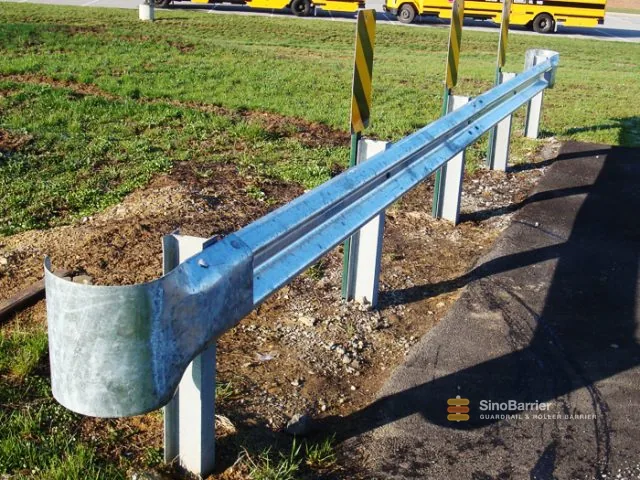
Galvanized W-Beam Guardrail
Galvanized W-beam panels for roadside barrier systems. Send your approved drawing to confirm dimensions, steel grade, hole pattern,…
View details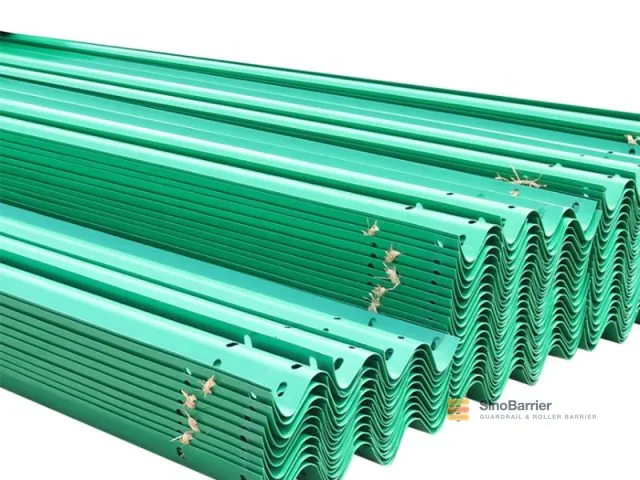
Powder Coated W-Beam Guardrail
Plastic-sprayed W-beam guardrail puts an electrostatic polyester powder coat over a hot-dip galvanized AASHTO M180 section — a…
View details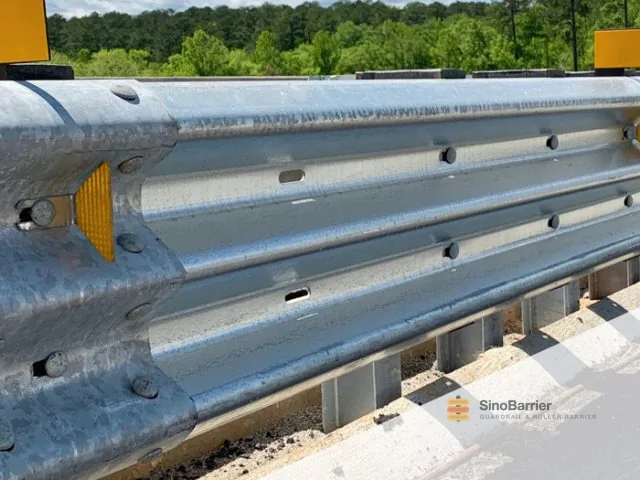
Thrie-Beam Guardrail
Thrie-beam panels have three corrugations and a deeper profile than W-beam panels. Confirm panel dimensions and matching components…
View details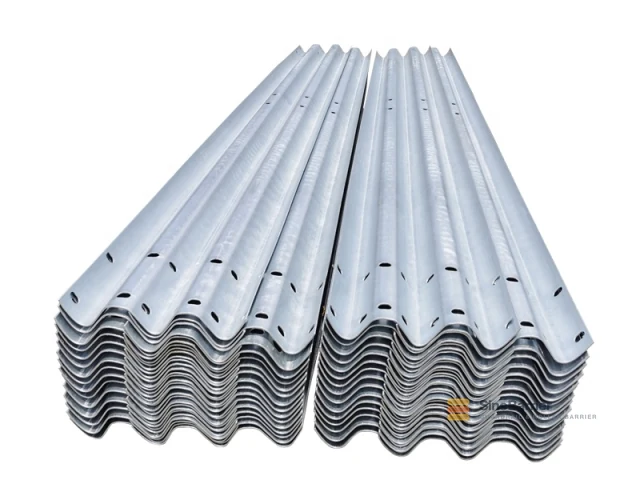
AASHTO M180 Thrie-Beam Highway Guardrail
Thrie-beam — Panel length: 4120 × 506 × 85 mm / 7920 × 506 × 85 mm; Section…
View detailsMore on W-Beam Guardrail
W-Beam vs Thrie-Beam Guardrail
The difference between a W-beam and a thrie-beam guardrail is the number of corrugations in the section. A W-beam has two waves,…
Read more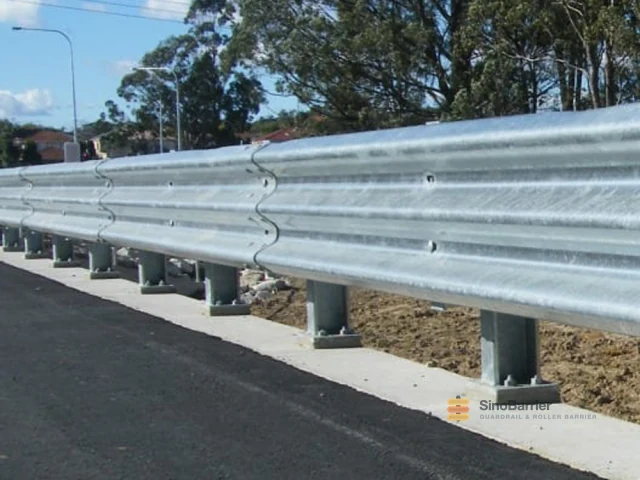
What Happens If You Hit a Guardrail?
When a vehicle leaves the carriageway and strikes a W-beam guardrail, the barrier does not stop the car dead — it is…
Read more